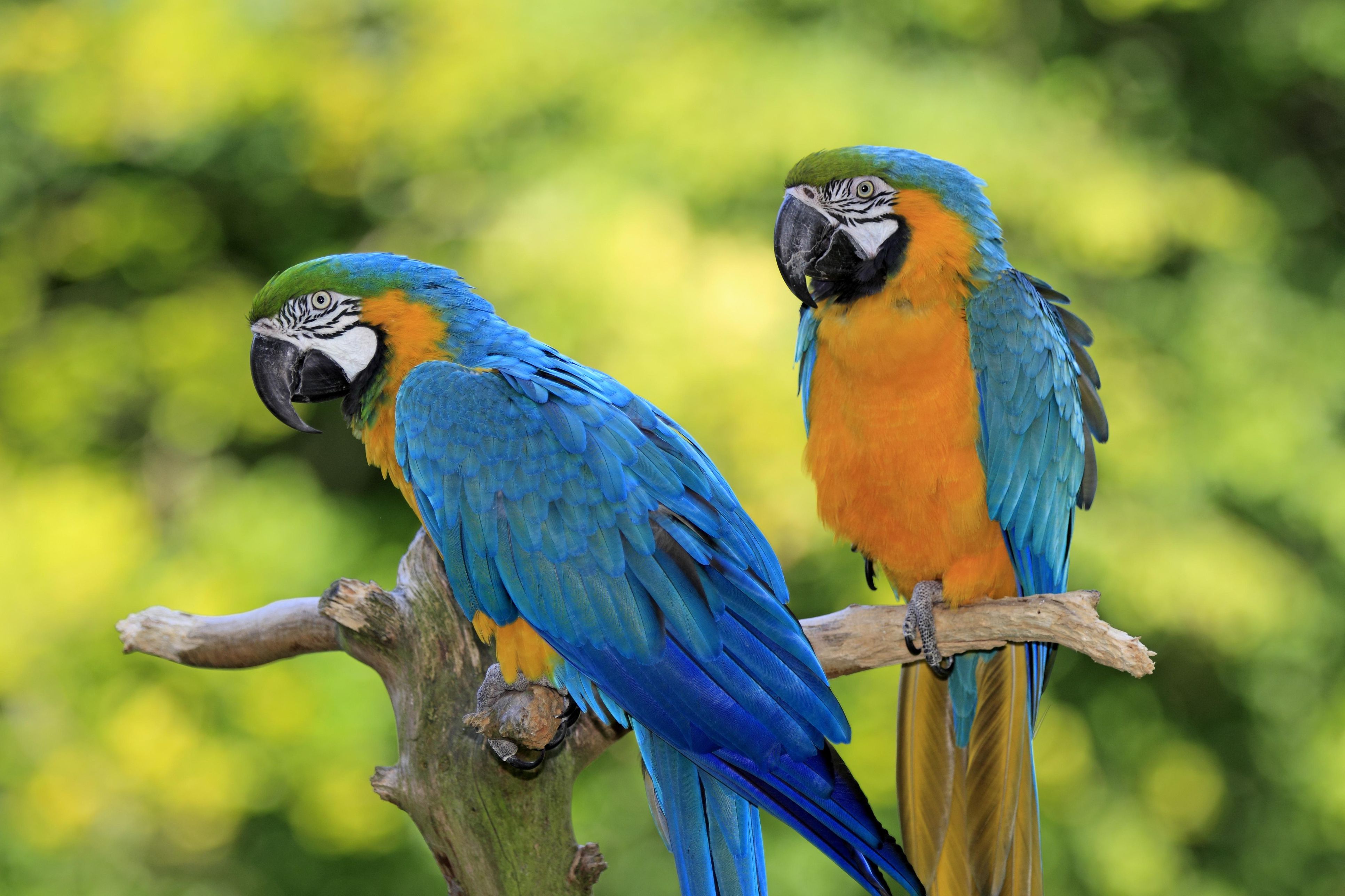
Parrots or psittacidae are known for their vibrant nature and colourful plumage, intelligence and bubbly nature. This is the prime reason why they are being cherished by a wide population of avian enthusiasts around the globe. The colourful plumage is a gift for them to be able to blend in with its surroundings or in other words natural camouflage to escape from predators. Basically most of the parrot species are sexually monomorphic, that means males and females look visually the same and it is literally impossible to distinguish between males and females, examples are many, like the African Grey Parrots, Macaws, Sun Conures, Jandaya Conures and so on. Some species are sexually dimorphic, that means males and females look different and could be easily identified/distinguished, for example the Eclectus Parrots.
So here is the hurdle, how to differentiate males and females in a monomorphic species?
So basically one cannot trust their eyes in case of sexing parrots. In early phases of conventional bird keeping, aviculturists relied on plumage, size and behaviour to distinguish between males and females, but this methodology is almost useless in case of monomorphic species. Then again natural pairing was another methodology adopted by many, in which a flock of same species were housed together and visually bonded birds were isolated and housed separately for breeding purposes, but this methodology also have its flaws, why?? Homosexuality in birds?? Yes of course males/males and females/females can give an impression of a bonded pair and thus wasting years of a bird keeper who intent to establish a species in an aviary. Proper pair formation is a must in aviculture to ensure genetic diversity, prevent accidental inbreeding, ensuring proper healthcare, ensuring hormonal balances in birds, avoiding hormonal aggression, proper nesting habits and vocalizations that is tied to the natural sexuality of a bird.
In this modern era, more scientific methods emerged into being which revolutionised aviculture. DNA sex analysis revolutionized aviculture in the 1990s which is non-invasive, accurate and easy and this is now the standard practice followed around the globe.
So let us understand what all are the methods that could be adopted to identify the sex of a parrot:
The best way to identify the sex is through DNA sexing or sending carefully collected sample material to DNA testing laboratories where they use PCR methodology to analyse genes on sex chromosomes (Z and W) in birds.
Different Sampling techniques are explained below.
Blood Sampling
A drop of blood is collected from a vein, the toenail or by pricking the fleshy part between the toes. PCR or polymerase chain reaction analysis is done on the blood sample to detect sex chromosomes. The accuracy of the result is 99.9% when the sample is not contaminated. This method is recommended for layman hobbyist or a hobbyist with experience in bird keeping. The drawback of this method is a novice bird keeper may not be able to do this.
Feather Sampling
This method requires freshly plucked feathers with intact quills. This is the most common parrot sex sampling method. Accuracy of the result ranges between 95% - 99% depending on the quality of the samples submitted. This method could be even adopted by a novice. This is a very safe method. The main drawback of this method is cross contamination when several samples are collected without following the right protocol, which means when one carelessly collect different samples at the same time, there can be cross contamination and hence equivocal results.
Eggshell Sampling
The membrane of a hatched eggshell is analysed to determine sex. The chicks are sexed without handling them while using this method. The accuracy of the result will be not as reliable as blood or feather sampling methods.
Mouth Swab Sampling
Mucus and tissues are collected from inside of a bird’s throat using a sterile swab. This method is very rarely used for sexing parrots, this method is more commonly used in mammals.
Veterinary medicine was always of help since the mid-century where surgical sexing was the gold standard in avian practice, but again there was no other options available to rely on. This is a 100% accurate methodology and an overview is given below:
Surgical Sexing (Endoscopy)
Surgical sexing existed way before DNA testing came into being as it was the only option available. This methodology involves examining the gonads of the parrots by a veterinarian using an endoscope. This method is a 100% accurate method for sexing parrots and this is the only method which reveals the maturity status and the reproductive status of the gonads of a bird. This method also helps in confirming prospects of future breeding status of a bird. This is an invasive procedure so this requires anaesthesia and carries some risk.
How to collect samples from a Parrot for DNA sexing/Test?
Feather Sampling – Pluck a few fresh feathers from the chest or from the back (the bottom most part above the tail feathers and cloaca of a bird).
Blood Sampling – When blood sample is needed, it needs to be drawn from a vein or clipping a nail, but this will need assistance from a veterinarian. Layman hobbyists can collect few drops of blood by pricking a sterile needle between the fleshy part of the toes, but if bleeding needs to be stopped one need to be equipped with corn starch or styptic powder (a fast acting clotting agent)
Eggshell Sampling – Collect only freshly hatched eggshells, rinse it with distilled water, dry the shell and store it in a paper envelope. This technique also needs some expertise or experience in bird keeping.
In short:
DNA sexing methodologies and techniques is the simplest and easiest way to identify sex of a parrot/bird. It is the most reliable and recommended method to determine sex of a parrot/bird. It is very convenient, safe and accurate, hence DNA sexing through blood or feather samples has become the most common practice among avian enthusiasts.
Credits/Courtesy
Sadiq Ali D. Bhaimia
Senior Aviculturist/Curator
MNJ Farms, Chennai
Anish Rajappan
Aviculturist
Crazy for Tiels
Trivandrum, Kerala